Do-Ho-Mania and the Danger of Doing Too Much
This is a fun, public-facing article I wrote for Dr. Shannon Withycombe’s class, Madness in America in Fall 2024. Enjoy!
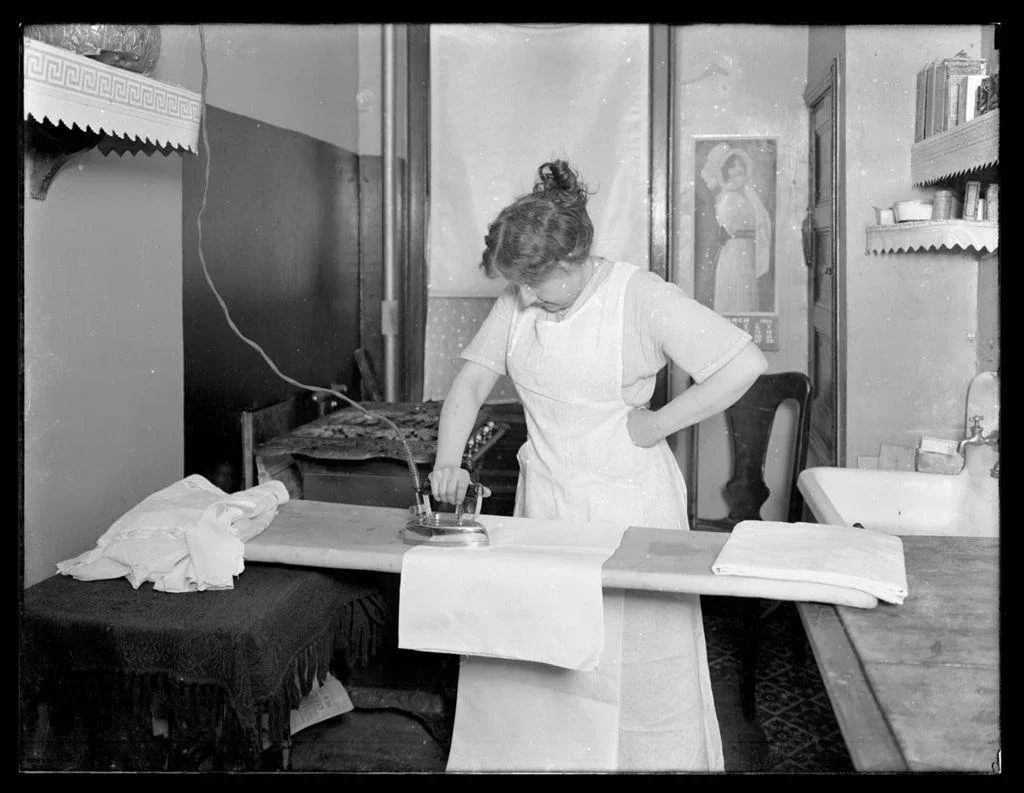
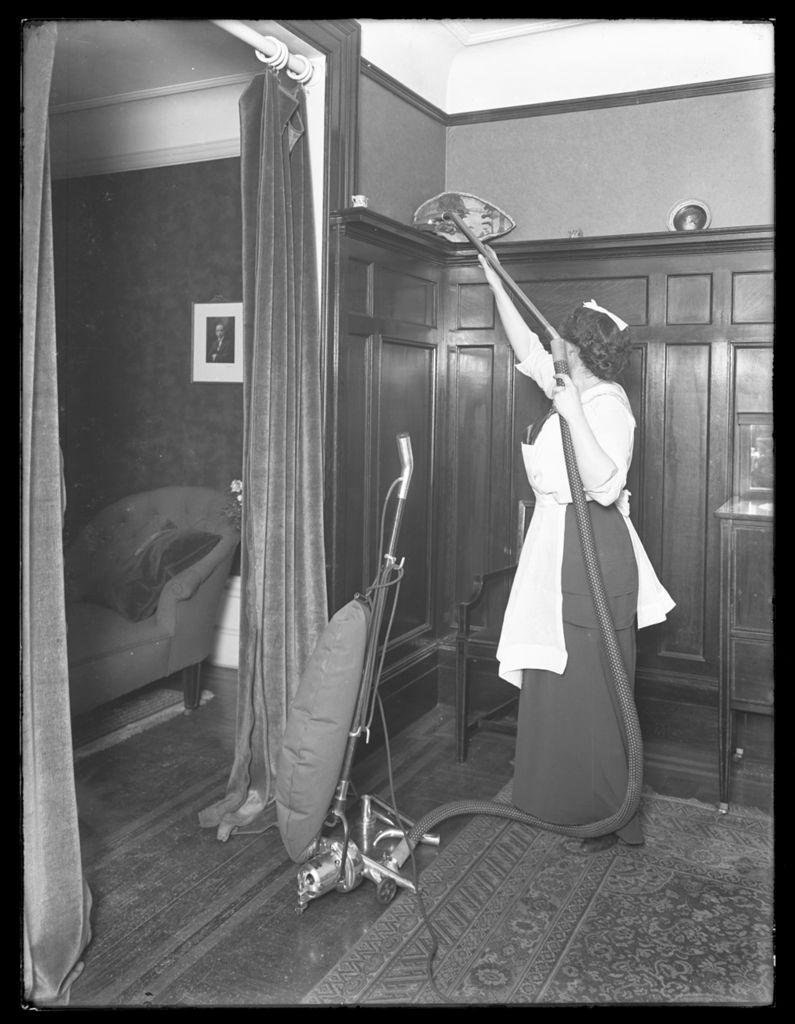
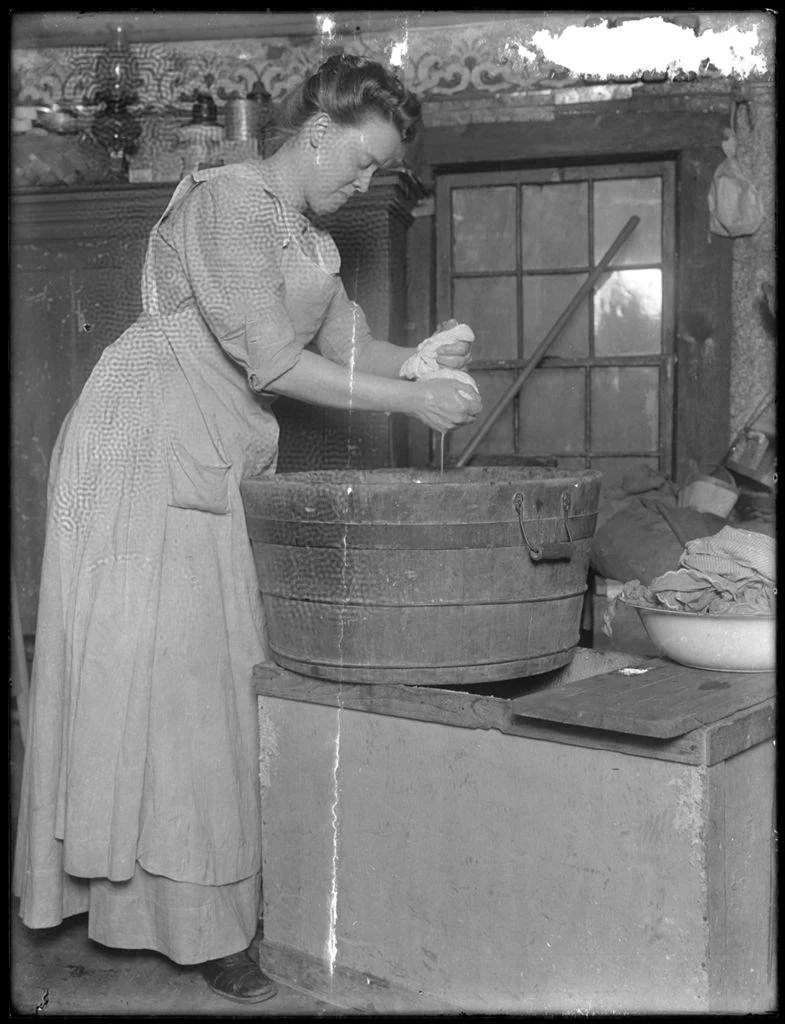
The medical field, newspapers, fiction, and domestic guidebooks all shared a cultural language: women were naturally nervous creatures who were prone to breakdown and constantly on the precipice of becoming societally undesirable. What’s worse is that their temperament could impact the happiness of their entire family unit. Women who were “overcivilized” could become manic and nervous—hysterical, even—and this could directly impact their ability to give birth. This concern was mostly projected onto upper- and middle-class white women who were born in the U.S. because racialized societal beliefs at the time determined that non-white women, immigrant women, and poor women were incapable of becoming too civilized. While all of this was a broadly accepted as truth, women were also under extreme pressure to maintain spotless homes, attractive appearances, and mild tempers. Thus, upper- and middle-class American women in 1903 existed inside of a tightening vice of impossible expectations. Wilcox’s article, “Do-Ho-Mania” exemplifies how these pressures intersected and how they were presented to the public.
To appreciate the depth of Wilcox’s argument, it is critical to understand that the early twentieth century was a moment in which domesticity was framed not only as a private concern, but as a national preoccupation that directly impacted its citizens. American culture was in the process of negotiating what womanhood should be. The concept of womanhood was poised between nineteenth century Victorian ideals and emerging “New Woman” Progressive Era reforms. Women were becoming more engaged in public life—they were entering colleges, joining clubs and reform movements, and pushing the boundaries of what femininity could include. Simultaneously, popular culture, including magazines like Good Housekeeping worked to reassert the idea that a woman’s primary sphere should be the home. The home was still considered a woman’s domain.
So, Wilcox’s comical framing served a dual purpose: it let her broach a sensitive topic—women’s mental state—while simultaneously re-inscribing the societal standard that women must be very vigilant about maintaining balance, self-control, and modesty. Wilcox’s article demonstrates that humor could soften the blow of cultural critique while still reinforcing the pressures it ostensibly warned against.
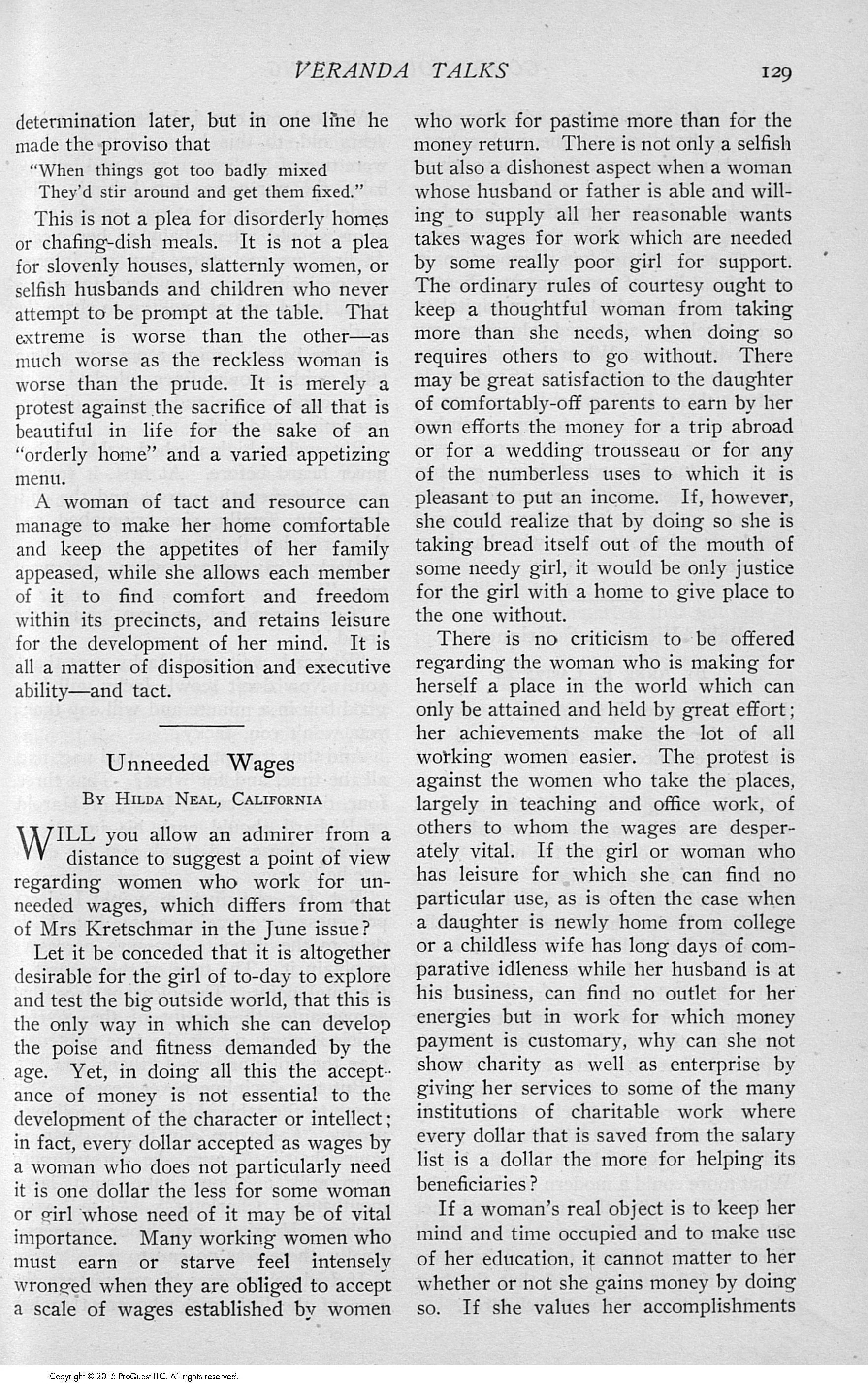
Readers encounter her message in an informal op-ed section of Good Housekeeping with the soothing name “Veranda Talks,” which also has some cultural significance. The veranda is a space which is not entirely within the home, but also not a public space. It mirrors the betwixt and between, liminal space women occupied in 1903. As mothers and wives, women were permitted to have a small part in public discourse but even then, this permission was centered around and anchored to their domestic duties. Wilcox’s so-called “talk” in this section of Good Housekeeping thus simulated a chummy chat, but its thinly-veiled message bore the weight of cultural mandate.2
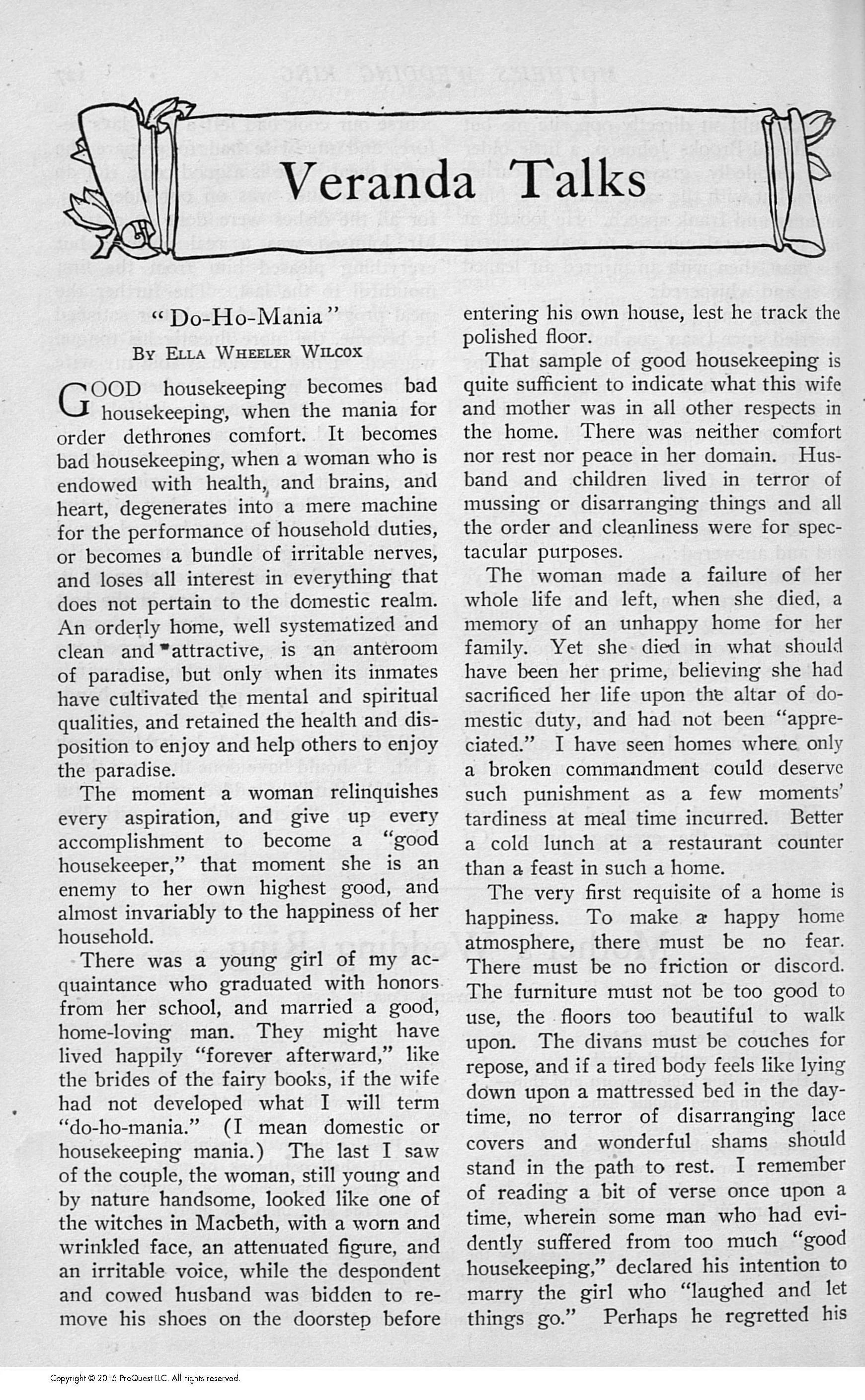
Wilcox and Print Media
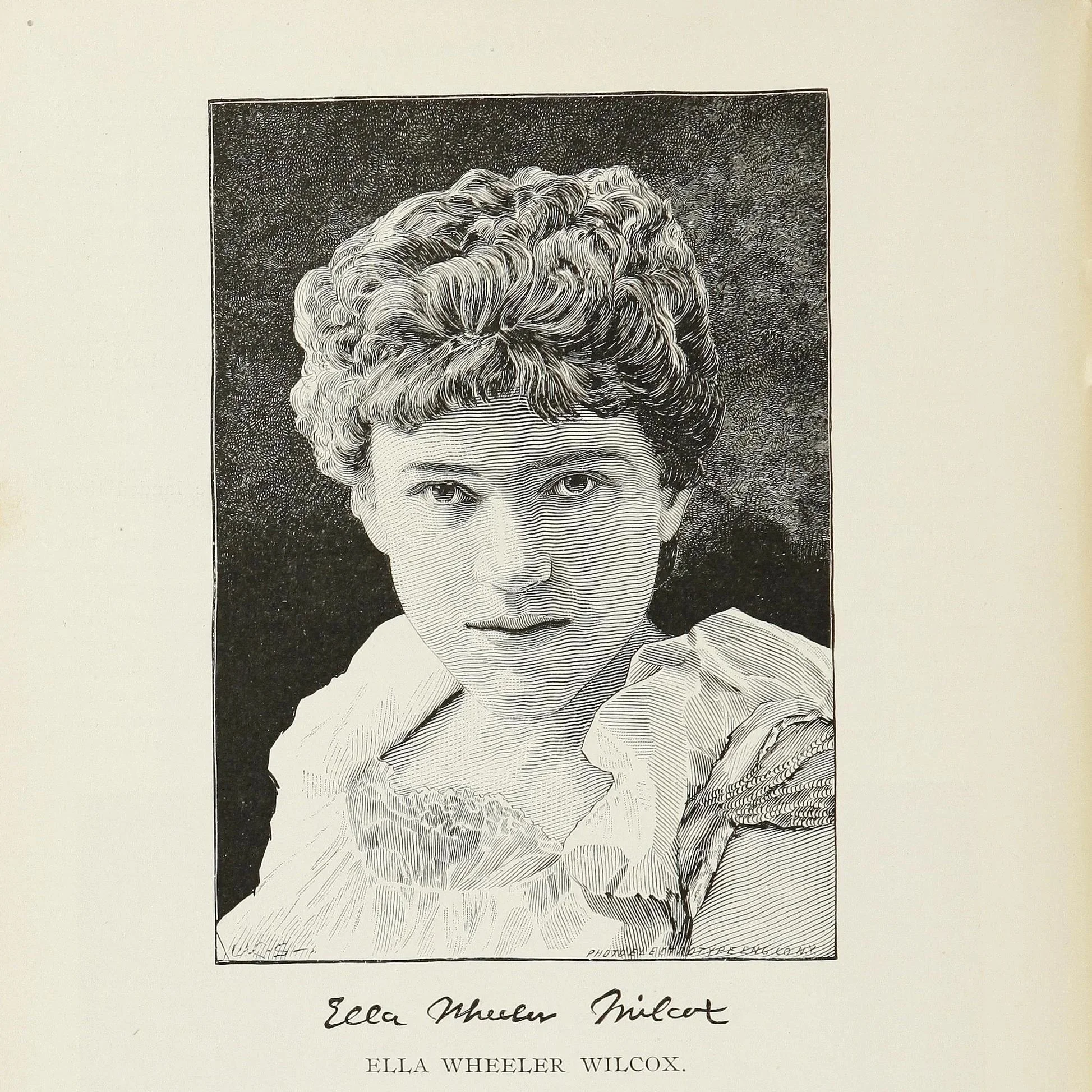
Wilcox was already a very famous and familiar name in the early twentieth century. She was a poet, a writer, and a prolific contributor to women’s magazines, which were in almost every upper- and middle-class household when “Do-Ho-Mania” was published. Wilcox was a white, educated upper-middle-class woman which was precisely the demographic that women’s magazines targeted and idealized. By the time Wilcox wrote “Do-Ho-Mania,” she was married, but her husband had passed away. As a middle-aged widow, Wilcox enjoyed the societal respect given to married women and avoided the stigma society often had against single women who worked.3
By the early 1900s, women’s magazines were extremely popular, a booming industry. Domestic purchasing decisions fell to women and magazines like Good Housekeeping and Cosmopolitan became central sites of consumer culture. This was a characteristic of the new, industrialized America and women’s print media capitalized on it by including a copious amount of paid advertisements for household products, beauty products, and other women’s necessities. Magazine advertisements and articles reflected women’s concerns about motherhood, health, and homemaking. Women writers like Ella Wheeler Wilcox were featured in women’s magazines.
Thus, women were both agents and objects of magazine content. What they read not only shaped how they spent their household’s finances, but it also impacted how they interacted with many aspects of their everyday lives. This commercial landscape is central to understanding the cultural implications of “Do-Ho-Mania.” The fact that Good Housekeeping published an article about not being too good of a housekeeper is ironic, but the irony is revealing of the cultural and societal systems that revered domestic labor and feared the fragility of upper- and middle-class white women’s sanity.4
Pathologizing Femininity
Wilcox writing about a made-up mental illness made sense for this time period. As is evidenced by the use of the word ‘mania’ in Ella Wheeler Wilcox’s article title, the early twentieth century was saturated with fascination and fear of mental illness. Popular media used madness as a metaphor in entertainment and often, madness was used as a literary device to implore its readers to be cautious of their own minds. In newspapers and magazines, nervous breakdowns, melancholia, and mania essentially became familiar characters—archetypes that reflected cultural understandings of the human mind and insanity. These stories often featured themes of domestic life, of crime, and of general moral decline.
The western world genders madness as an inherently feminine trait. During the eighteenth century, there was a notable shift in how insanity was represented—what was once characterized as a violent, masculine threat to the state became a feminized condition that required a benevolent patriarchal hand to treat it. As the psychiatric profession filled with men, insane asylums filled with women as patients causing a disparity between the genders. In the U.S.—which was deeply and directly influenced by European medical thought—this gendered imbalance continued into the twentieth century.
This imbalance is reflected in popular culture. When Wilcox used the term “mania” in her Good Housekeeping article, she was tapping into a sort of cultural shorthand that her readers would have been very familiar with and understood instantly. Popular media depicted female insanity as grotesque and frighteningly tragic—at times, even humorous. These tropes were grounded in a cultural and societal system that pathologized women’s behaviors and viewed their mental health as fragile, morally influenced, and unstable. Thus, deeming a woman who was obsessed with achieving domestic perfection as “manic” was not simply a playful thing, it was a reflection of early twentieth century social anxieties.5
Do-Ho-Mania and the Fragile Ideal of Womanhood
Ella Wheeler Wilcox’s term “Do-Ho-Mania” is short, witty, and deceptively light-hearted, but the underlying message is serious.
Wilcox frames her light-hearted advice as a plea to women. It is a warning to women, too: women must preserve their sanity for the sake of their families. She is quick to say that being a good housekeeper is admirable, but overdoing means risking degenerating into something almost monstrous, something industrial instead of something feminine: warm, loving, pious and soft. They could become “mere machines” and “terrors”—“enemies” in their own domestic sphere.
Wilcox softens the severity of her message why shortening the phrase “domestic housekeeping mania” (which almost sounds like it could be an actual diagnostic term for the time) to the breezy “do-ho-mania.” She shares a vivid anecdote about a women who cleaned so diligently and obsessively that she became like “one of the witches in Macbeth,” who intimidated her husband into being a timid, depressive man. She understood her readers’ devotion to preserving their “true womanhood” and knew that evoking the image of a witch would frighten them and pressure them to heed her advice.
She used light-hearted humor to reinforce and re-entrench cultural norms:
Women should keep their home clean, but not too clean.
Women must care deeply but not obsess.
Women must routinely and efficiently fulfill their duties, but not to the point of becoming a machine.
If a woman fails at housekeeping, she risks being labeled negligent.
If she excels too fiercely, she risks losing her mind.
The impossibly narrow societal expectations reflect broader cultural beliefs: women were constantly on the verge of becoming undesirable.6
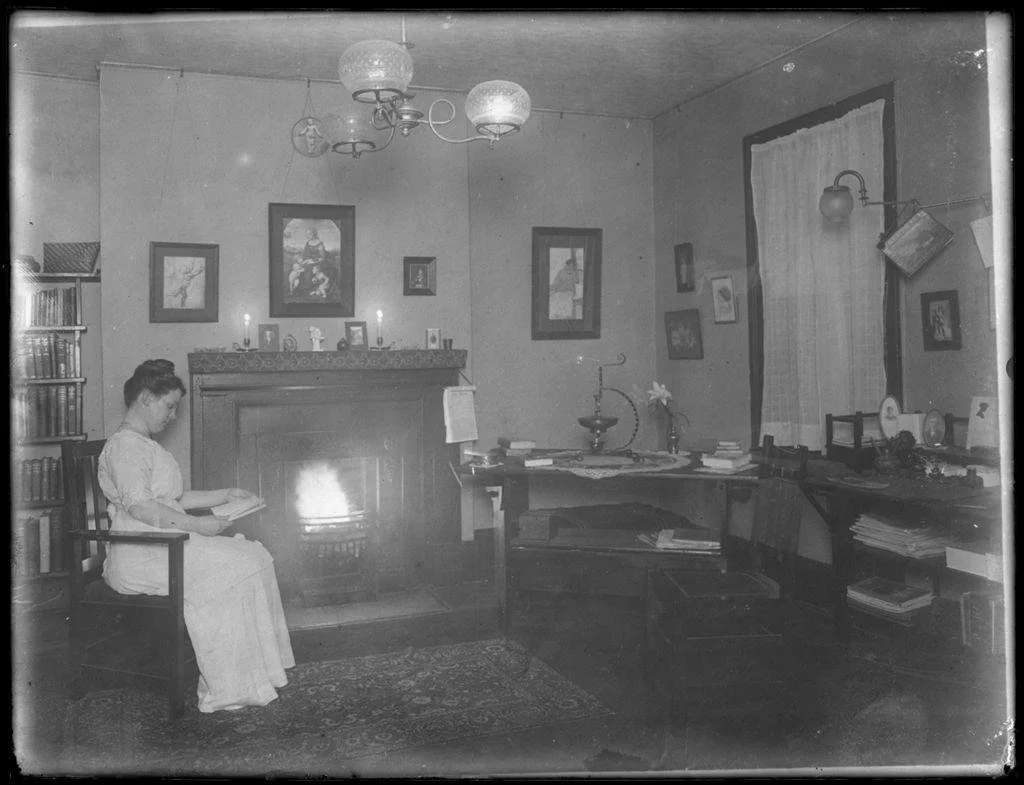
Unidentified woman in living room ca. 1910
Housekeeping and the Cost of Living
Manuals like The Cost of Living classified domestic labor as a profession and a science. It guaranteed to women that if they were careful and efficient, if they housekept correctly, they could uplift their entire families and even impact the entire nation. The contents of these domestic manuals provide us with some cultural context for Emma Wheeler Wilcox’s article.
These manuals framed housekeeping as a professional pursuit. They emphasized that small efficiencies practiced on a grand scale in all upper- and middle-class white households can preserve the “race” and American society. Domestic cleanliness was next to citizenship.
For women who were still under the bonds of coverture, this message could have felt empowering to read, but in fact, it intensified gendered scrutiny. Women were told that they must manage their homes with absolute precision and scientific rigor while also maintaining a warm, loving, attractive, and emotionally stable sense of self. Their failures meant extreme personal and familial damage and their excess was pathologized.
With this context, we see that “Do-Ho-Mania” fit neatly within the pressure created by society’s standards of domesticity and femininity. Women were expected to embody efficiency without appearing to be too much, too obsessive, they were expected to be devoted, without becoming consumed, and respectable, but not rigid.7
Gendered Madness in Medical Discourse
Psychiatric texts like T.S. Clouston’s Clinical Lectures on Mental Diseases brought a sense of medical authority to madness. By proxy, they also brought a sense of medical authority to popular media caricatures that resembled insanity. These caricatures were prevalent in popular media and in the American cultural imagination.
In texts like Clouston’s, mania, melancholy, and nervousness were moralized and gendered. Women were considered particularly vulnerable to mental deviations especially if they strayed from their natural roles as domestic housekeepers, mothers, and wives.
Psychiatrists viewed mental health as a scale or continuum. Normal people—especially women—could slide into insanity rather easily. Manuals like Clouston’s asserted that women’s intellectual and emotional excess could undermine their reproductive and domestic fitness, and in the grand scheme of things, this could negatively impact the family and thus, the nation’s well-being.
This medical discourse is reflected and reinforced in Wilcox’s article.
A woman could harm her entire household by becoming overly zealous in her domestic duties. “Do-Ho-Mania” portrays the over-achieving housekeeper as a danger to society.
If a woman’s mental health was unstable, it was a public concern and a domestic failure.8
Conclusion
Women’s magazines guided women to fit into the cultural mold of “proper” femininity by offering a steady stream of beauty tips, household advice, and intimate op-ed columns that made these expectations seem normal—even friendly. Flip through an issue of Good Housekeeping from the early twentieth century and you would find a mixture of instruction, entertainment, and encouragement that somewhat stealthily nudged women toward the version of womanhood society idealized.
Simultaneously, domestic manuals contributed their own kind of pressure onto early twentieth century women. These manuals promised that a home run efficiently could elevate an entire family, but they also warned that a woman could go wrong in countless ways. Perfection was the goal, but the goal post moved constantly.
Layered on top of all of this, psychiatric texts insisted women were delicate creatures, always teetering on the brink of emotional collapse. Medical authorities linked women’s mental stability to their moral value and suggested that staying calm and upkeeping their “natural” duties was essential to being seen as desirable and respectable.
Popular media eagerly used these ideas and ran with them. Stories, illustrations, and quirky advice columns portrayed female madness as dramatic plot points or cautionary tales, sprinkling in psychiatric terminology throughout everyday entertainment and print media.
Altogether, these cultural influences envisaged a world in which women were expected to keep pristinely clean homes, maintain a serene composure, and never slip into excess. Women were expected to do all of this and smile through it. It was a balancing act that was nearly impossible to maintain, but early twentieth century society impressed upon women that it could define their very existence.9

Works Cited
2. Laura Briggs, “The Race of Hysteria: “Overcivilization” and the “Savage” Woman in Late Nineteenth-Century Obstetrics and Gynecology, American Quarterly, no. 2 (2000): 246-248; Lynn Gamwell and Nancy Tomes, Madness in America: Cultural and Medical Perceptions of Mental Illness before 1914, (Cornell University Press, 1995), 121; Gerald N. Grob, Mental Illness and American Society, 1875-1940, (Princeton University Press, 1983), 122; Elaine Showalter, The Female Malady, (Pantheon Books, 1985), 124; Showalter, The Female Malady, 4-7; Gamwell, Madness in America, 121;Carroll Smith-Rosenberg, “The Hysterical Woman: Sex Roles and Role Conflict in 19th-Century America,” Social Research, no. 4 (1972): 653;Barbara Welter, “The Cult of True Womanhood: 1820-1860,” American Quarterly, no. 2 (1966): 151-152; Gerda Lerner, “The Lady and the Mill Girl: Changes in the Status of Women in the Age of Jackson,” Midcontinent American Studies Journal, no. 1 (1969): 9-11.
3. E.D. Walker, “Ella Wheeler Wilcox,” Cosmopolitan Magazine, November 1888. 46-52.
4. Mary Ellen Zuckerman, A History of Popular Women’s Magazines in the United States, 1792-1995, (Greenwood Press, 1998), 3-4, 26, 34.
5. Lerner, “The Lady and The Mill Girl,” 11; Welter, “The Cult of True Womanhood,” 152, 174; Lerner, “The Lady and The Mill Girl,” 14; Molly Ladd-Taylor, Mother-work: Women, Child Welfare, and the State, 1890-1930, (University of Illinois Press, 1994), 113; Showalter, The Female Malady, 123-124,144.
6. Ella Wheeler Wilcox, “Do-Ho-Mania,” Veranda Talks in Good Housekeeping, August 1903. 128-129.
7. Ellen H. Richards, “The Organization of the Household” in The Cost of Living (Chapman and Hall, Limited: 1900); Carroll Smith-Rosenburg and Charles Rosenberg, “The Female Animal: Medical and Biological Views of Woman and her Role in Nineteenth-Century America,” The Journal of American History, no. 2 (1973): 333; Smith-Rosenberg, “The Hysterical Woman,” 657; Gamwell, Madness in America, 127; Smith-Rosenberg, “The Female Animal,” 340; Joel A. Tarr and Mark Tebeau, “Managing Danger in the Home Environment, 1900-1940,” Journal of Social History, no. 4 (1996): 798-802; John L. Rury, “Vocationalism for Home and Work: Women’s Education in the United States, 1880-1930,” History of Education Quarterly, no. 1 (1984): 25-26.
8. Thomas Clouston, Clinical Lectures on Mental Diseases (Lea Brothers and Company: 1904); Grob, Mental Illness in American Society, 36-37; Wilcox, “Do-Ho-Mania,”128-129.
9. Gamwell, Madness in America, 71; Showalter, The Female Malady, 4-7, 52-53, 124; Smith-Rosenberg, “The Female Animal,” 340; Zuckerman, Popular Women’s Magazines, 34; Tarr, “Managing Danger,” 798-800; Rury, “Vocationalism,” 22-26; Grob, Mental Illness in American Society, 36-37; Showalter, The Female Malady, 126; Lerner, “The Lady and the Mill Girl,” 11; Welter, “The Cult of True Womanhood,” 152.
Bibliography
Primary
Clouston, Thomas. Clinical Lectures on Mental Diseases. Philadelphia, PA: Lea Brothers and Company, 1904.
Walker, E.D. “Ella Wheeler Wilcox.” Cosmopolitan Magazine, 6, no. 1 (1888): 46-52.
Wilcox, Emma Wheeler. “Do-Ho-Mania.” Good Housekeeping, 37, no. 2 (1903): 128-129. https://libproxy.unm.edu/login?url=https://www.proquest.com/wma/magazines/do-ho-mania/docview/1715556764/sem-2?accountid=14613.
Richards, Ellen H. “The Organization of the Household.” The Cost of Living. London, UK: Chapman and Hall, Limited, 1900.
Secondary
Gamwell, Lynn and Nancy Tomes. Madness in America: Cultural and Medical Perceptions of Mental Illness Before 1914. Ithaca, NY: Cornell University Press, 1995.
Grob, Gerald N. Mental Illness and American Society, 1875-1940. Princeston, NJ: Princeton University Press, 1983.
Ladd-Taylor, Molly. Mother-work: Women, Child Welfare, and the State, 1890-1930, Champaign, IL: University of Illinois Press, 1994.
Lerner, Gerda. “The Lady and the Mill Girl: Changes in the Status of Women in the Age of Jackson,” Midcontinent American Studies Journal, no. 1 (1969): 5-15. https://www.jstor.org/stable/40640814
Rury, John L. “Vocationalism for Home and Work: Women’s Education in the United States, 1880-1930,” History of Education Quarterly, no. 1 (1984): 21-44. https://www.jstor.org/stable/367991
Showalter, Elaine. The Female Malady: Women, Madness, and English Culture. New York, NY: Pantheon Books, 1985.
Smith-Rosenberg, Carroll. “The Hysterical Woman: Sex Roles and Role Conflict in 19th-Century America.” Social Research, no. 4 (1972): 653-678. https://www.jstor.org/stable/40970115
Smith-Rosenburg, Carroll and Charles Rosenberg, “The Female Animal: Medical and Biological Views of Woman and her Role in Nineteenth-Century America,” The Journal of American History, no. 2 (1973): 332-356. https://www.jstor.org/stable/2936779
Tarr, Joel A. and Mark Tebeau, “Managing Danger in the Home Environment, 1900-1940,” Journal of Social History, no. 4 (1996): 797-816. https://www.jstor.org/stable/3788666
Welter, Barbara. “The Cult of True Womanhood: 1820-1860,” American Quarterly, no. 2 (1966): 151-174. https://www.jstor.org/stable/2711179
Zuckerman, Mary Ellen. A History of Popular Women’s Magazines in the United States, 1792-1995, Westport, CT: Greenwood Press, 1998.